
The two biggest problems healthcare providers face are storing patient information and sharing it with other authorized institutions, such as hospitals, clinics, labs, and private practices. To address these problems, organizations use two types of solutions in the market to manage secure sharing and data storage. The first is Health Information Exchange (HIE), and the second is Electronic Health Record (EHR).
HIE is a system of networks that enables healthcare organizations, like hospitals and clinics, to share patient data across multiple providers. Whereas an Electronic Health Record (EHR) is a digital record-keeping solution designed to store and manage patient data within a single healthcare institute.
In this article, we will explain what each solution is for, what features they offer, and how you can choose one for your business.
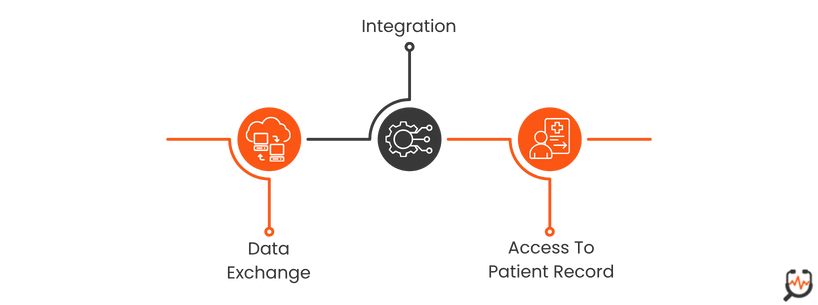
- Integration: Seamlessly connects with other healthcare systems, like EHRs that store patient data
- Data Exchange: Enables healthcare institutions to exchange data with each other to ensure practitioners have the right information
- Access To Patient Record: Lets practitioners access clinical information, like lab reports and test results
- Carequality
Carequality is a national interoperability framework that connects diverse health information networks, enabling the standardization of data sharing across vendors and organizations.
- eHealth Exchange
eHealth Exchange is a health information network that connects hospitals and clinics nationwide. It provides a common trust framework and APIs for secure data exchange, enabling healthcare organizations to share patient information easily.
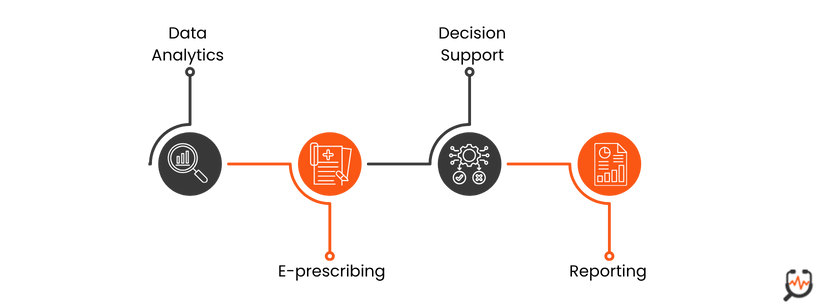
- Data analytics: Provides insights into patient health by surfacing details like disease patterns and the impact of treatments
- Decision support: Equips doctors with data-backed recommendations to help them make better decisions
- E-prescribing: Enables healthcare providers to send and update prescriptions online, without having patients to visit in person
- Reporting: Generates detailed reports that help practices and hospitals stay compliant and improve clinical and financial performance.
- Epic
Epic software is an all-in-one platform that is designed to equip both patients and practitioners with important health data. It aims to simplify data exchange between all the parties involved in providing healthcare services, enabling them to provide more personalized care, and securely store and manage patient records, including lab results, clinical notes, and medications.
- CareCloud
CareCloud is a digital record-keeping solution that collects and stores patient data. It offers solutions for revenue cycle management, practice management, and patient experience management. The software equips users with a range of tools, including AI-powered notes and clinical decision support that lets them provide better care to patients.

HIEs and EHRs serve distinct roles in modern healthcare. An EHR helps with collecting, storing, and managing patient data, whereas an HIE helps organizations share data through secure networks. The one suits you depends on the type of functionality you want. In an ideal situation, both should be used together to provide an end-to-end solution for data management.
We highly recommend that you read more resources to understand these solutions better, so that you will be able to make a better decision when buying one.