Top Innovative Features In Best Mental Health EMRs For Transforming Care

Electronic Medical Records (EMRs) have become indispensable tools in mental health practices, helping practitioners deliver quality care while reducing administrative burden. For mental health providers, the right EMR is more than a digital filing cabinet—it’s a partner in navigating the complexities of patient care, compliance, and operational efficiency.
In recent years, innovative features in EMRs have redefined how mental health practices operate. These advancements go beyond basic functionality, addressing key challenges such as managing sensitive patient data, improving collaboration among providers, and personalizing care to better meet individual needs. By integrating cutting-edge technologies, EMRs are empowering practices to provide care that is both efficient and deeply empathetic.
In this blog, we’ll explore the most innovative features shaping the best mental health EMR software, examining how these tools are driving meaningful improvements in patient outcomes and practice operations.
- AI and machine learning in EMRs personalize care and enhance clinician efficiency.
- Telepsychiatry features make mental health services more accessible and flexible.
- VR integration in EMRs boosts patient engagement and therapeutic outcomes.
- Remote monitoring tools in EMRs enable continuous, data-driven patient care.
- Innovative EMR features streamline operations and support empathetic care delivery.
AI And Machine Learning Integration
![]()
The integration of Artificial Intelligence (AI) and Machine Learning (ML) into EMRs is revolutionizing mental health care by offering the following applications.
Predictive Analytics
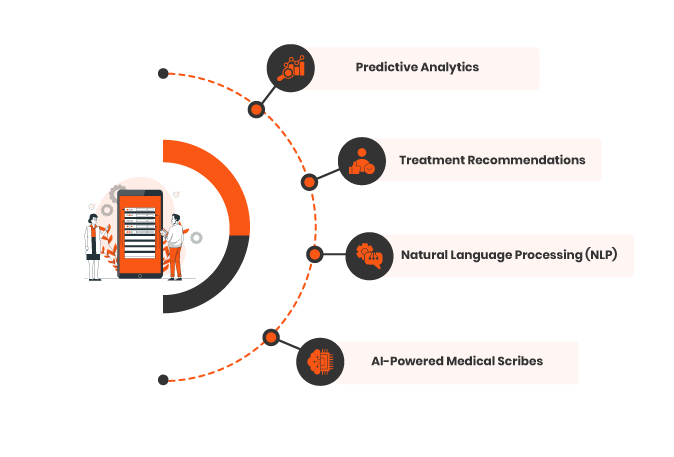
AI-driven predictive analytics enable the analysis of extensive patient data to forecast potential mental health crises, allowing for timely and proactive interventions. By identifying patterns and risk factors, these systems assist clinicians in anticipating issues such as depressive episodes or anxiety attacks, thereby improving patient outcomes through early intervention.
Treatment Recommendations
Machine Learning (ML) models contribute to personalized care by suggesting evidence-based treatment options tailored to individual patient histories and outcomes from similar cases. This personalized approach ensures that treatment plans are more effective and aligned with each patient’s unique needs, improving the overall quality of care.
Natural Language Processing (NLP)
Natural Language Processing (NLP) can help transform unstructured clinical notes into structured data, facilitating comprehensive analysis and informed decision-making. By extracting valuable information from free-text entries, NLP enhances the EMR’s ability to provide actionable insights, thereby supporting clinicians in delivering more precise and efficient care.
AI-Powered Medical Scribes
The advent of AI-powered medical scribes is transforming clinical documentation. These scribes utilize advanced speech recognition and NLP technologies to transcribe patient sessions in real time. This automation allows clinicians to focus more on patient interaction rather than manual note writing, thereby improving the quality of care.
For instance, platforms like eClinicalWorks EMR software capture natural conversations between clinicians and patients, generating comprehensive clinical notes without interrupting the flow of the session.
Telepsychiatry And Remote Care Capabilities
![]()
The integration of telepsychiatry and remote care features into EMRs has enhanced accessibility, enabling professionals to deliver treatment to at-risk and underserved patients.
Video Consultation Integration
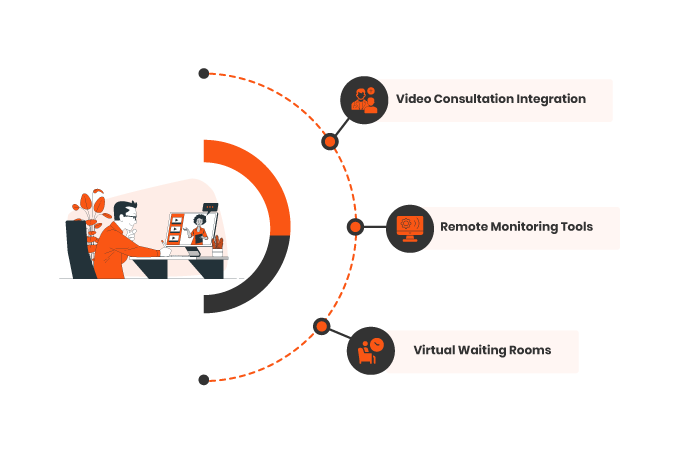
Modern EMRs now incorporate video consultation features directly within their platforms, enabling clinicians to conduct uninterrupted remote sessions. This integration facilitates real-time audio and video interactions, allowing for immediate documentation within the patient’s electronic health record.
The best mental health EMR software even augments these virtual visits with AI-powered medical scribes, enabling clinicians to focus entirely on the patient without the distraction of manual documentation, making the consultation feel more natural.
Remote Monitoring Tools
The integration of remote monitoring tools within EMRs allows for continuous tracking of patients’ health metrics between sessions. By synchronizing data from wearable devices and health apps, clinicians can monitor vital signs, activity levels, mood, sleep patterns, and medication adherence. This continuous data flow enables timely interventions and personalized care plans, boosting patient outcomes.
Virtual Waiting Rooms
Advanced scheduling systems within EMRs now feature virtual waiting rooms, efficiently managing both in-person and virtual appointments. These systems smoothen patient flow, reduce wait times, and improve the overall patient experience. By providing a structured environment for patients awaiting their consultations, virtual waiting rooms contribute to a more organized and patient-friendly practice.
Virtual Reality (VR) Integration

The integration of the best Virtual Reality (VR) technology into EHR software is a gamechanger for mental health care.

Therapeutic Applications
Some EMRs are incorporating VR physical therapy (PT) options to provide immersive treatment experiences that can enhance virtual therapy outcomes. These systems offer a suite of VR therapeutic applications designed to address various health conditions, including mental health disorders. These applications also enable patients to engage in controlled virtual environments, facilitating exposure therapy for anxiety disorders and phobias, thereby improving treatment efficacy.
Patient Engagement And Outcomes Improvement
VR technology has been shown to improve patient engagement, motivation, and adherence to treatment plans through interactive environments. By immersing patients in realistic scenarios, VR can make therapeutic exercises more engaging, which is particularly beneficial in rehabilitation settings.
For example, VR-based rehabilitation programs have been found to enhance patient motivation and participation, leading to better outcomes compared to traditional methods.
The Future Of Mental Health EMRs: A Path Toward Better Care
The continuous evolution of mental health EMRs demonstrates their vital role in transforming care delivery. From AI-driven insights to VR-based therapies, these innovative features are improving patient outcomes, increasing accessibility, and reducing the burden on mental health providers.
As technology continues to advance, mental health EMRs will remain at the forefront of personalized and empathetic care, ensuring that both patients and practitioners benefit from smarter, more efficient solutions.